


Shannon Farris, Ph.D.
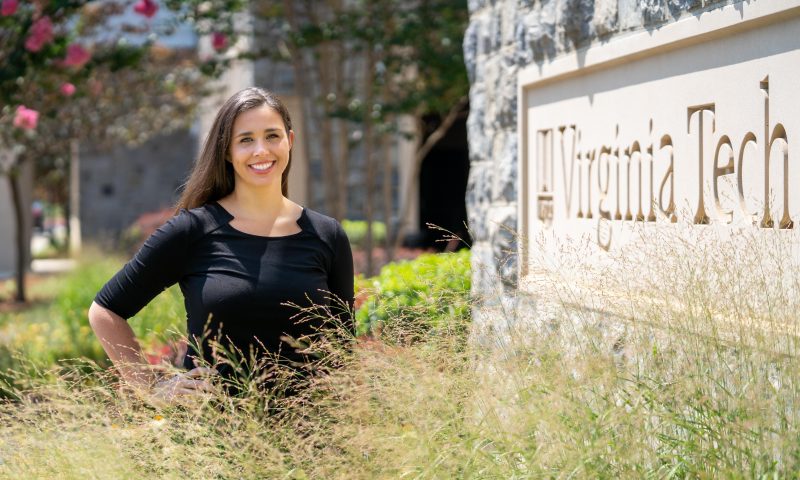
"We want to know how the connections between individual neurons are changed or remodeled during learning.”
Examining how brain cell synapses are involved in learning, memory storage, and social behavior
How do we learn? And how is learning impacted by neurodevelopmental disorders?
Shannon Farris, Ph.D. studies the molecular and cellular mechanisms underlying learning and how these processes are disrupted in neurodevelopmental disorders, such as autism spectrum disorders. Dr. Farris strives to understand how neurons respond during learning and how those responses differ between cell types thought to store different aspects of memory, such as who, what, when, and where.
It’s widely believed that changes in the strength of specific synapses are the molecular correlate of memory storage in the brain. Neurons engaged during a learning experience often respond by altering the levels of transcription and translation of molecules needed for memory storage. One of the many challenges that neurons need to overcome is the distance between where molecules are made in the nucleus, and the synapse where they are needed, which is often hundreds of microns away. One way neurons achieve this is by localizing RNA molecules at the synapse, so that they can be rapidly translated in response to local cues, such as changes in the activity of specific inputs. These newly synthesized proteins can then remodel the strength of synaptic connections in an input- and synapse-specific fashion.
Dr. Farris’s lab is focused on investigating dendritically localized RNAs in area CA2 of the hippocampus, a subregion that is resistant to long-term potentiation - or synapse strengthening - and cell death. The CA2 subregion is thought to be required for storing social memory, or “the who” aspect of memory. Given that a number of neurodevelopmental disorders are characterized by disruptions in social processing, investigating the post-transcriptional mechanisms critical to CA2 function and gaining a comprehensive molecular understanding of how social experiences are stored in the brain may lead to novel therapies relevant for individuals with social deficits.
Her lab uses a combination of mouse genetics to gain access to specific hippocampal cell-types, deep sequencing technologies to obtain a genome-wide view of transcription and translation, and single molecule imaging techniques to illuminate the processes regulating dendritic RNA in vivo. Dr. Farris hopes to provide mechanistic insight on the behaviorally-induced synaptic modifications in the hippocampus that may be required for encoding social behavior.
farrissl@vt.edu
R-2118, Riverside 2
- Assistant Professor, Fralin Biomedical Research Institute at VTC
- Assistant Professor, Department of Biomedical Sciences and Pathobiology, Virginia-Maryland College of Veterinary Medicine
- Assistant Professor, Department of Internal Medicine, School of Medicine
Shannon Farris, James M. Ward, Kelly E. Carstens, Mahsa Samadi, Yu Wang, Serena M. Dudek. (2019). Hippocampal Subregions Express Distinct Dendritic Transcriptomes that Reveal Differences in Mitochondrial Function in CA2. Cell Reports 29.
Pannoni KE, Fischer QS, Tarannum R, Cawley ML, Alsalman MM, Acosta N, Ezigbo C, Gil DV, Campbell LA, Farris S. MCU expression in hippocampal CA2 neurons modulates dendritic mitochondrial morphology and synaptic plasticity. Sci Rep. 2025 Feb 6;15(1):4540. doi: 10.1038/s41598-025-85958-4. PMID: 39915602 Free PMC article.
Pannoni KE, Gil D, Cawley ML, Alsalman MM, Campbell LA, Farris S. Layer-specific mitochondrial diversity across hippocampal CA2 dendrites. Hippocampus. 2023 Mar;33(3):182-196. doi: 10.1002/hipo.23512. Epub 2023 Feb 10. PMID: 36762797 Free PMC article.
National Institute of Environmental Health Sciences, National Institutes of Health
Postdoctoral Fellow
- University of California Irvine: Ph.D., Biomedical Sciences (Neuroscience)
- California Polytechnic State University San Luis Obispo: B.S., Biochemistry, concentration in Molecular Biology
- NARSAD Young Investigator Award, 2021
- NIH Pathway to Independence Award K99/R00, 2016
-
Article Item
 Learning how memories are saved and lost , article Date: Feb 12, 2026 -
 -
Article Item
-
Article Item


-
Article ItemVirginia Tech neuroscientists discover mitochondria’s role in shaping memory circuits , article
Researchers have revealed a critical process that supports the brain cells needed for learning, memory, and social recognition.
Date: Feb 11, 2025 - -
Article ItemJames R. Carter Sr. Memorial Awards support Alzheimer’s and dementia research , article
By studying how mitochondria support neuronal function important for memory formation and how the brain’s blood vessels respond to changes in blood flow and oxygenation, Mikel Cawley and Hanaa Abdelazim hope to advance research into degenerative brain diseases.
Date: Mar 08, 2024 - -
Article ItemGaskins fellowship will support doctoral student’s goal of becoming a physician-scientist , article
Renesa Tarannum, who earned a medical degree in Bangladesh, is working on her doctoral research while making progress toward becoming a licensed U.S. physician.
Date: Nov 02, 2023 - -
Article ItemVirginia Tech scientist identifies narrow opportunity to address a disease connected with autism, schizophrenia , article
A National Institutes of Health grant will allow a team led by Anthony-Samuel LaMantia, a professor at the Fralin Biomedical Research Institute, to further his 20-year deep dive into DiGeorge syndrome, a genetic disorder that is usually diagnosed too late for treatment.
Date: Mar 31, 2023 - -
Article ItemFralin Biomedical Research Institute expands Summer Undergraduate Research Fellowship program , article
More than 30 undergraduate and high school students worked behind the curtain of biomedical research this summer at the Fralin Biomedical Research Institute at VTC.
Date: Aug 16, 2022 - -
Article ItemMedical student searches for dynamic cellular organelles in molecular memory lab , article
Working in the lab of Shannon Farris, assistant professor at the Fralin Biomedical Research Institute at VTC, Dinesh Lal undertook the challenge of looking for a specific structure, the Golgi apparatus, inside cells of the brain’s hippocampus.
Date: Mar 10, 2022 - -
Article ItemNeuroscientists explore differences in mitochondria of memory cells in the brain with new NIH funding , article
With a new five-year, $2-million National Institutes of Health grant, Shannon Farris, assistant professor at the Fralin Biomedical Research Institute at VTC, is mapping out the diverse bioenergetic and molecular characteristics of CA2 neuronal circuits to learn more about how social memories are formed, stored, and forgotten.
Date: Nov 09, 2021 - -
Article ItemEarly career biomedical researcher gets professional boost through NIMH diversity supplement program , article
Niesha Savory, a clinical neuroscience and psychology undergraduate student at Virginia Tech who conducts research at the Fralin Biomedical Research Institute at VTC, has always been fascinated with how the brain works.
Date: Feb 12, 2021 -
-
Redirect Item
-
Redirect Item
-
Redirect Item
-
Redirect Item
View All Coverage
-
Redirect Item
-
Redirect Item
-
Redirect ItemMed India: Mechanism Of Social Memory In The Brain – Explored! , redirect Date: Nov 10, 2021 -
-
Redirect Item
-
Redirect Item
-
Redirect ItemBig Lick of Science Podcast: Unzip your genes: Traits, DNA, & RNA , redirect Date: Sep 19, 2019 -
Page 1 of 2 | 12 Results