


Cancer Research Center — D.C.
CANCER RESEARCH CENTER — D.C.
Engineering Cancer Solutions

-
Home Item
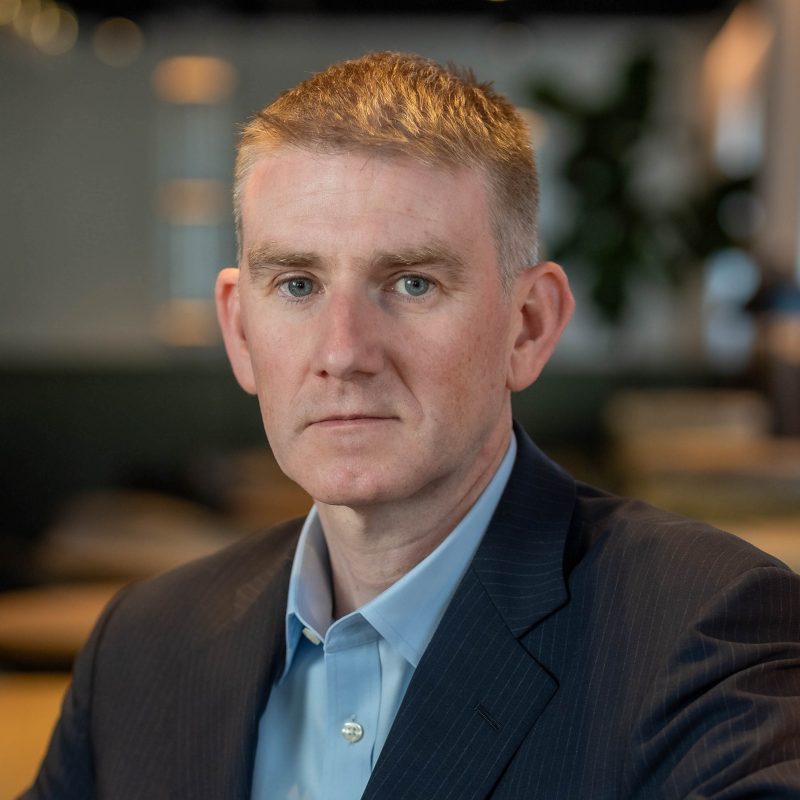 Christopher Hourigan, DM, DPhil, FRCP , home
Professor, Director, Cancer Research Center – D.C.
About the Cancer Research Center — D.C.
The Cancer Research Center in Washington, D.C., brings together basic, translational, and computational researchers of the Fralin Biomedical Research Institute in the nation’s capital to focus on the shared aim of engineering cancer solutions. Current research efforts involve diverse teams and national and international collaborations, and are motivated by the opportunity to apply world-leading scientific innovation and ingenuity to make measurable progress on the hardest problems.
The center is led by Chris Hourigan DM, DPhil., FRCP, an oncologist focusing on precision cancer medicine.
-
Home Item
 Hourigan Lab , home
The Hourigan Lab is focused on bringing precision medicine approaches to the care of patients suffering from the rare, highly-fatal, blood cancer Acute Myeloid Leukemia.
-
Home Item
 Mei Lab , home
The Mei Lab uses computational biology techniques to study the mechanisms of tumor microenvironment remodeling and regulation during metastasis.
-
Home Item
 Mulvaney Lab , home
The Mulvaney Lab studies cellular signaling pathways and how changes in these pathways contribute to cancer with the goal of translating these findings into meaningful clinical improvements for patient care.
-
Home Item
 Yu Lab , home
The Yu Lab studies the basic principles of how chromatin modifying machineries and downstream effector proteins function and how cancer cells hijack these mechanisms to facilitate oncogenesis.
-
Article Item
 High school student takes on pediatric cancer , article Date: Oct 01, 2025 -
 -
Article Item
 Researcher advances new approach to blood cancer treatment , article Date: Sep 30, 2025 -
 -
Article Item

-
Article ItemHard-to-treat cancers respond to combination therapy using a new class of drugs , article
In a powerful new approach, Fralin Biomedical Research Institute scientists use advanced gene editing to study potential dual therapy for lung, brain, and pancreatic cancers.
Date: Jul 25, 2025 - -
Article ItemScientists uncover immune cells that help prostate cancer resist treatment and a way to stop them , article
Scientists at the Fralin Biomedical Research Institute identified a subtype of immune cells that helps advanced prostate cancer evade the body’s defenses, suggesting a new approach for treatment.
Date: Jul 10, 2025 - -
Article Item‘Every time we wait, we lose someone who might have made it’ , article
For every careful step forward in cancer research, there is a patient waiting — a family holding its breath in the middle of the night. That reality was clear at the Fralin Biomedical Research Institute’s Cancer Research Symposium.
Date: Jun 27, 2025 - -
Article ItemNew study aims to improve treatment for pediatric brain cancer , article
With grant support from The Children’s Cancer Foundation Inc., a nonprofit that serves the Baltimore-Washington region, Fralin Biomedical Research Institute scientists are focused on ending an glioblastoma.
Date: Jun 09, 2025 - -
Article ItemFinding community and focus in interdisciplinary cancer research , article
Doctoral student Blanka Bordas had not planned to work in Washington, D.C., as she earned her degree, but opted to do so for the chance to work with an outstanding mentor on cancer research
Date: Apr 11, 2025 - -
Article ItemGraduate students share work at inaugural research showcase at Academic Building One , article
Graduate students from programs across the greater Washington, D.C,. metro area shared their work at the Graduate Education Week Research Showcase in Alexandria.
Date: Apr 03, 2025 - -
Article ItemChildren’s National Hospital, Virginia Tech expand research partnership to advance pediatric health , article
The partnership brings together Children’s National, ranked among the nation’s top pediatric hospitals by U.S. News & World Report, and Virginia Tech, a leading academic research institution.
Date: Feb 04, 2025 - -
Article ItemNew Virginia Tech cancer researcher seeks to understand and predict deadly tumor metastasis , article
Shenglin Mei, the newest principal investigator of the Fralin Biomedical Research Institute Cancer Research Center in Washington, D.C., applies computational biology, genetics, and immunology to study cancer’s spread away from the primary tumor.
Date: Dec 17, 2024 - -
Article ItemLeading oncologist to share how understanding DNA helps diagnose and treat cancer , article
Physician-scientist Luis Diaz Jr., a member of the National Academy of Medicine, will deliver the next Maury Strauss Distinguished Public Lecture at the Fralin Biomedical Research Institute at VTC on Thursday, Nov. 21.
Date: Nov 15, 2024 - -
Article ItemVirginia Tech, Children’s National Hospital, and industry experts explore the impact of AI on health care , article
While exploring the potential of artificial intelligence, old fashioned networking and human relationships held the floor.
Date: Sep 24, 2024 - -
Article ItemScientist awarded National Institutes of Health grant to examine cancer-related enzyme , article
Kathleen Mulvaney, assistant professor with the Fralin Biomedical Research Institute’s Cancer Research Center — D.C., will investigate the basic biology of PRMT5, an enzyme that can be found in 15 percent of human cancers.
Date: Sep 10, 2024 - -
Article ItemPhysician-scientist to spearhead focused ultrasound research for pediatric brain tumors at Virginia Tech , article
Cheng-Chia "Fred" Wu joins forces with Fralin Biomedical Research Institute at VTC and Children’s National Brain Tumor Institute to help children with cancer.
Date: Jul 31, 2024 - -
Article ItemFederal leaders take center stage at Engineering Cancer Solutions mini-symposium , article
Three federal leaders – one each from the White House, the National Cancer Institute, and the Food and Drug Administration – mixed with Virginia Tech students, early career researchers, and leadership at the Fralin Biomedical Research Institute Cancer Research Center in Washington, D.C.
Date: Jul 12, 2024 - -
Article ItemTesting for residual cancer cells before blood cell transplant therapy is important and practical, new study finds , article
Patients in remission after battling blood cancer are likely to have better outcomes if no trace of the cancer is detectable before the patients receive donor blood cells. The finding in JAMA Oncology emphasizes the importance of testing for lingering cancer cells in the body after people receive apparently successful chemotherapy treatment.
Date: May 02, 2024 - -
Article ItemVirginia Tech professor to be inducted into prestigious American Society for Clinical Investigation , article
Christopher Hourigan, director of the Cancer Research Center – D.C., has been inducted into the American Society for Clinical Investigation, a historic membership for a faculty member of Virginia Tech.
Date: Apr 04, 2024 - -
Article ItemEminent cancer physician-scientist joins Virginia Tech to lead research in Washington, D.C. , article
A National Institutes of Health senior investigator who studies and treats blood cancer, Christopher Hourigan is joining Virginia Tech to lead cancer research at the Fralin Biomedical Research Institute in Washington, D.C.
Date: Apr 01, 2024 - -
Article ItemRare Disease Day brings worldwide attention to more than 7,000 rare diseases , article
Virginia Tech research into rare diseases — those that individually affect 200,000 or fewer but collectively touch 1 in 10 people in the U.S. — provides hope in identifying, treating, and supporting patients.
Date: Feb 28, 2024 - -
Article ItemFrom healthy development to cancer treatments, Fralin Biomedical Research Institute scientists aim for impact , article
New Seale Innovation Fund projects fuel a broad spectrum of research focused on cardiovascular disease, diabetes, cancer, stress, brain development, and more.
Date: Jan 29, 2024 - -
Article Item2023 marks a year of firsts for Translational Biology, Medicine, and Health Graduate Program , article
The interdisciplinary program saw its first student assigned full-time to a Fralin Biomedical Research Institute lab in Washington, D.C., its first students from Nepal and Ghana in an internationally diverse incoming cohort, and its first student to be awarded a prestigious grant for future physician-scientists.
Date: Dec 15, 2023 - -
Article ItemNew cancer drug shows promise in targeting genetic weakness in tumors, Virginia Tech expert says , article
In an invited review article in Cancer Discovery, a journal of the American Association for Cancer Research, Kathleen Mulvaney, assistant professor with the Fralin Biomedical Research Institute at VTC, talks about the potential of a new drug that has shown early promise in clinical trials for solid tumors by killing cancer cells that lack specific genes.
Date: Nov 01, 2023 - -
Article ItemCommon challenge, different strategies: Virginia Tech Cancer Research Alliance gathers broad mix of researchers and clinicians , article
The second annual Virginia Tech Cancer Research Alliance retreat, hosted this year on the Children’s National Research & Innovation Campus, brought together scientists and physicians on the leading edge of developing innovative therapy types, fresh biological targets, and new technologies to take on cancer.
Date: Jun 21, 2023 - -
Article Item‘We have a very rich resource here’ , article
Scientist Jia-Ray Yu and collaborators tackle pediatric brain cancer in Fralin Biomedical Research Institute’s growing presence in the greater Washington, D.C., metro area.
Date: Jun 20, 2023 - -
Article ItemPhilanthropy supports pilot projects to take on health challenges such as heart disease, diabetes, cancer, stress, and chronic pain , article
Giving Day contributions to the Fralin Biomedical Research Institute at VTC have double the impact, unlocking $20,000 to the Seale Innovation Fund to accelerate innovation
Date: Feb 15, 2023 - -
Article ItemNew cancer biologist targets ‘Achilles heel’ in deadly brain cancers , article
Cancer biologist Kathleen Mulvaney joins the faculty of the Fralin Biomedical Research Institute at VTC on Oct. 1. Her lab will be in Washington, D.C., on the Children’s National Research & Innovation Campus as part of a partnership between Virginia Tech and Children’s National.
Date: Sep 27, 2022 - -
Article ItemRare disease research gives families hope, ‘vital’ to advancing medicine , article
Rare diseases afflict 300 million people worldwide. Fralin Biomedical Research Institute at VTC researchers are bridging a gap in scientific knowledge by studying some of the diseases that together add up to a formidable public health challenge. Feb. 28 marks the 14th international Rare Disease Day.
Date: Feb 28, 2022 - -
Article ItemCancer biologist to join Fralin Biomedical Research Institute faculty, launch research lab in Washington, D.C. , article
Jia-Ray Yu will be the first Virginia Tech faculty member to move into the university’s new research facilities on the Children’s National Research & Innovation Campus. Yu will be a member of the Fralin Biomedical Research Institute at VTC, and an assistant professor in the Virginia-Maryland College of Veterinary Medicine starting Sept. 1.
Date: Jul 02, 2021 -
Recent Media Coverage
-
Redirect Item
-
Redirect Item
-
Redirect Item
-
Redirect Item
-
Redirect Item
-
Redirect Item
-
Redirect Item
-
Redirect Item
-
Redirect ItemDrug Target Review: New drug combo targets PRMT5 to fight deadly cancers , redirect Date: Jul 31, 2025 -
-
Redirect Item
Page 1 of 6 | 60 Results
