


Special Seminar: Roads, Motors, and Cargo: Journey to a New Therapy for Hypertension
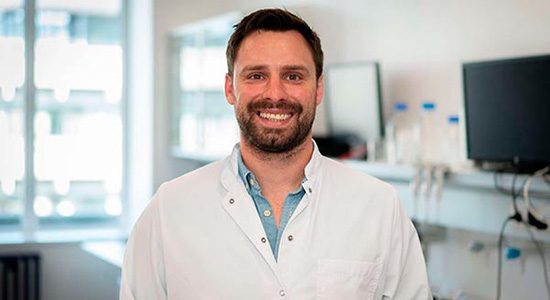
Thomas A. Jepps, Ph.D, FBPHS
Associate Professor
Department of Biomedical Sciences, Physiology of Circulation, Kidney, and Lung
University of Copenhagen, Denmark
Roads, Motors, and Cargo: Journey to a New Therapy for Hypertension
Date: March 11, 2025
Time: 2 p.m.
About this Seminar
Dr. Jepps will focus on the microtubule network in vascular smooth muscle cells, which acts like a road network to traffic proteins to and from the cell membrane. He will show how the microtubule network regulates the expression of key ion channels and receptors in vascular smooth muscle cells using the motor protein dynein. Furthermore, he will show how, by disrupting the microtubule network, vasodilatations that were attenuated in arteries from hypertensive rodents can be restored. Dr. Jepps will then show how, in vivo, administration of colchicine – a clinically approved drug known to disrupt the microtubule network and have cardiovascular protective effects – to hypertensive rats reduced blood pressure, improved vasodilatations, attenuated vascular remodeling and inflammation, and suppressed left ventricular fibrosis. Finally, this work has been translated to humans, where improvements in vascular conductance are observed after oral colchicine administration. Thus, this talk will aim to convince you that colchicine may be a promising therapeutic for the treatment hypertension.
You May Also Be Interested In...
-
Home Item
 Presenting Therapeutic Peptides Using Synthetic Polymers , home
Nov. 20, 2026, 11:00 a.m. | Rachel A. Letteri, Ph.D., Associate Professor, Departments of Chemical Engineering, University of Virginia | Co-Sponsored by the Fralin Biomedical Research Institute and the Center for Vascular and Heart Research
-
Home Item
 Three Lessons About the Brain from the Neuroscience of Emotion , home
Dec. 10, 2026, 5:30 p.m. (Reception at 5 p.m.) | Lisa Feldman Barrett, Ph.D., University Distinguished Professor, Northeastern University and Massachusetts General Hospital | Maury Strauss Distinguished Public Lecture
-
Home Item
 The Bitter Truth: Alcohol Use and Its Effects on Chemosensory Function , home
Dec. 11, 2026, 11:00 a.m. | Paule V. Joseph, Ph.D., MBA, M.S., Senior Investigator, Lasker Clinical Research Scholar, NIH Distinguished Scholar, Acting Chief, Section of Sensory Science and Metabolism Unit, NIDCD; Co-Director, National Smell and Taste Center; Attending Nurse Practitioner, Division of Intramural Clinical and Biological Research; National Institute on Alcohol Abuse and Alcoholism, National Institute on Deafness and Other Communication Disorders | Co-Sponsored by the Fralin Biomedical Research Institute and the Center for Health Behaviors Research
-
Home Item
 Learning and Memory in the Infant Brain , home
Jan. 29, 2026, 11:00 a.m. | Nicholas B. Turk-Browne, Ph.D., Susan Nolen-Hoeksema Professor of Psychology; Director, Wu Tsai Institute, Yale University | Co-Sponsored by the Fralin Biomedical Research Institute and the Center for Human Neuroscience Research
-
Home Item
 How Sleep Shapes the Infant Brain , home
Feb. 12, 2027, 11:00 a.m. | Mark Blumberg, Ph.D., University of Iowa Distinguished Chair, Department Chair, Psychological & Brain Sciences, The University of Iowa | Co-Sponsored by the Fralin Biomedical Research Institute and the Center for Neurobiology Research
-
Home Item
 The Science of Individuality: What Makes Us Who We Are? , home
Feb. 26, 2027, 11:00 a.m. | Terry Jernigan, Ph.D., Distinguished Professor of Cognitive Science, Psychiatry, and Radiology; Director, UCSD Center for Human Development, University of California, San Diego | Co-Sponsored by the Fralin Biomedical Research Institute and the Center for Health Behaviors Research